
Liberty Township Previous Residents by Era
For Liberty Township previous residents, the strongest first question is not simply who had a familiar street number. It is which source can place a person or a property in the period being researched. The Trumbull County Auditor property search supplies the current parcel doorway. A deed can move the ownership trail backward. A library volume, newspaper item, or census schedule may add household evidence. Each source has a different time frame and a different limit.
| Source | Years It Covers | Where Held | What It Shows |
|---|---|---|---|
| Recorder online data and images | 1795 to present, except military discharges | Recorder Public Access and counter | Recorded party and property trail; it is a name index, not an address index. |
| Auditor property roll | Current roll; historical start not stated | Auditor portal, phone, or counter | Current parcel, owner entry point, situs address, and legal-property context. |
| Liberty Township atlas | 1918 | WTCPL Digitized Resources | Roads, plats, and subdivision context, not a household list. |
| Directories and telephone books | Exact local runs require catalog confirmation | WTCPL catalog and Local History & Genealogy Center | A reported address or occupant when a relevant volume exists. |
| Newspapers, obituary index, and census | Newspaper microfilm 1812 to present; census released under the 72-year rule | WTCPL, NARA, and library databases | Notices, citations, and household-at-date evidence. |
Liberty Township has no verified standalone directory run or confirmed street-renumbering record. Treat a nearby-city volume as a lead only after checking its title page, geographic scope, and the address itself. A modern postal label can also differ from the historic wording on a map or deed.
Note: Preserve the source, date, parcel identifier, and exact place wording for each Liberty Township finding so later checks can reproduce the trail.
Liberty Township Previous Residents Start With Parcels
Use the Auditor's verified quick search, which accepts a parcel, owner, or address, to select the correct Liberty Township property. Match the situs address, township, parcel number, and legal-description context before copying anything into a timeline. A Youngstown postal address does not place a parcel in Mahoning County when the parcel record identifies Liberty Township in Trumbull County.
Capture the current owner as an entry key, not proof of who occupies the address. The county data separates situs, owner-mailing, and taxpayer-mailing information. A mailing address can belong to an agent, a post-office box, or another property. Likewise, a person who lived at the property without owning it may not appear in the current roll.
- Parcel number and current situs address
- Legal description, subdivision, lot, or block detail
- Displayed current owner name and any prior deed reference
- Source URL and access date
Liberty Township Previous Residents Deed Trail
The Trumbull County Recorder offers online data and images back to 1795, with military discharges excluded from ordinary remote access. That unusually deep record trail can help with Liberty Township previous residents, but the Recorder says its records are indexed by name rather than location. Move from the parcel's current owner and legal description to the Recorder's party records. Do not enter a street name and expect a countywide address history.
- Open the selected Auditor parcel and record its legal description, parcel identifier, current owner, and any prior-deed clue.
- Search the current owner as the grantee or party in Recorder Public Access, then locate the acquisition document.
- Read the document image for the grantor, grantee, recording details, legal description, and any cited prior instrument or book and page.
- Search the seller in the role that reveals that party's acquisition, then compare the legal description before adding another link to the chain.
- Repeat only when the parcel or legal-description continuity holds. For a known reference, the Recorder counter, phone, or written copy request is the fallback.
- Grantor
- The party conveying an interest in the recorded document.
- Grantee
- The party receiving that recorded interest.
- Chain of title
- The sequence of recorded transfers tied to the same property.
- Legal description
- The lot, subdivision, metes-and-bounds, or other property wording used to confirm the document concerns the same land.
The Recorder can provide general information by phone when an instrument number or volume and page are known, but staff do not perform detailed or title searches. Older maps and county archive records may help when a document reference will not resolve online.
Note: A chain can fail at a same-name document, so compare the legal description before treating any listed party as a predecessor owner.
Liberty Township Previous Residents Need Name Keys
The missing geographic index is the decisive local limit. One past owner may have held several parcels, and a matching surname can point to the wrong lot. Validate every proposed deed against the legal description, lot or block, parcel context, and recorded cross-reference. A street address is useful for reaching today's parcel, but it is not the Recorder's durable search key.
The Recorder's AlertMe registration screen shows the county's real-estate-transfer monitoring option.
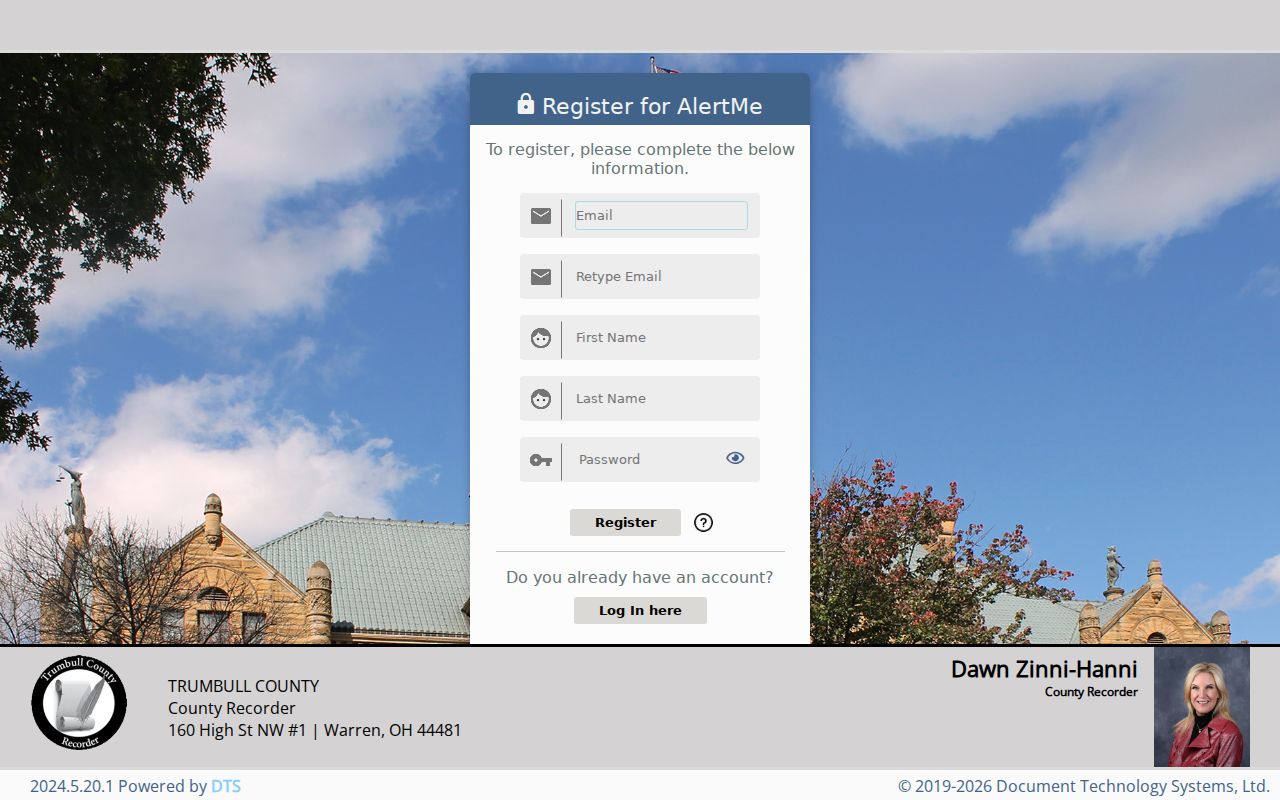
AlertMe can help a current interested party monitor recorded transfers, but it does not establish a past household or replace document review.
Liberty Township Previous Residents and 1918 Plats
The library's digitized 1918 lower-townships atlas includes the Liberty/Girard map and Liberty Township plats. It can bridge an older road, subdivision, or plat description to a current parcel. Compare the atlas labels with the deed's legal description and the Auditor parcel before assuming a modern street number existed in the same form.
Historic geography adds another useful check. Liberty Township began as part of Youngstown civil township, and Church Hill became the post-office name in 1833 after another Liberty postal area created a conflict. Search historic newspapers, catalogs, and maps with the wording that the original source uses rather than silently replacing it with a modern postal city.
Boundary lines in the county GIS are approximate. Use the map to connect roads and parcel context, not to locate survey pins or decide a legal boundary.
Note: A plat or atlas can place a property in time, but only a matching recorded document establishes the property-transfer link.
Past Liberty Township Residents in Directories
Ownership is only one part of a past-residents search. A library-confirmed reverse or criss-cross directory can report an occupant or subscriber at a street number in the publication year. Check the same person in the alphabetical portion, copy the abbreviation key, and then repeat the search in a nearby volume. The historical collections themselves are described on the Liberty Township city directories page.
Pair a confirmed directory entry with a released federal census when the dates fit. The directory may name a household head or subscriber, while a census can identify a household on its enumeration date. Neither source substitutes for a deed, and a directory run must not be assumed merely because it is common elsewhere.
- Confirm that a cataloged directory or telephone volume covers the relevant Liberty-area street and year.
- Record the street-number entry, exact name spelling, abbreviations, publisher, and publication year.
- Check the alphabetical entry and a released census near the same period.
- Compare the address against the plat and legal description if the road name or number appears to have changed.
Liberty Township Previous Residents in Notices
The Warren-Trumbull County Public Library maintains county newspaper microfilm from 1812 to the present. Its online Warren Tribune Chronicle obituary index covers 1961 through 2025, with printed and PDF fallbacks for other periods. An index result is a citation, not the full notice. Preserve the newspaper date, page, and column, then obtain the item from the library or microfilm before drawing a family conclusion.
For a focused request, the LH&G research request form accepts brief questions and up to five citations. It requires a date of death for an obituary request and is not intended for an open-ended house search. The Warren center, its catalog, and a Book-a-Librarian appointment are better routes for a wider address timeline.
An obituary citation can also point toward an estate file, but read the underlying Probate Court record before stating an heir relationship. Newspaper notices and estate filings answer different questions.
Liberty Township Previous Residents House History
The Trumbull County Historical Society offers a Historic Building Recognition and research-report route for a qualifying county property that is at least 75 years old. Its stated research-report fee is $60, and the report may provide architecture or build-year context, an ownership list, and past-owner biographical sketches. It is a focused house-history service, not a universal answer for every Liberty Township address.
The Recorder FAQ confirms online data and images back to 1795, apart from military discharges.
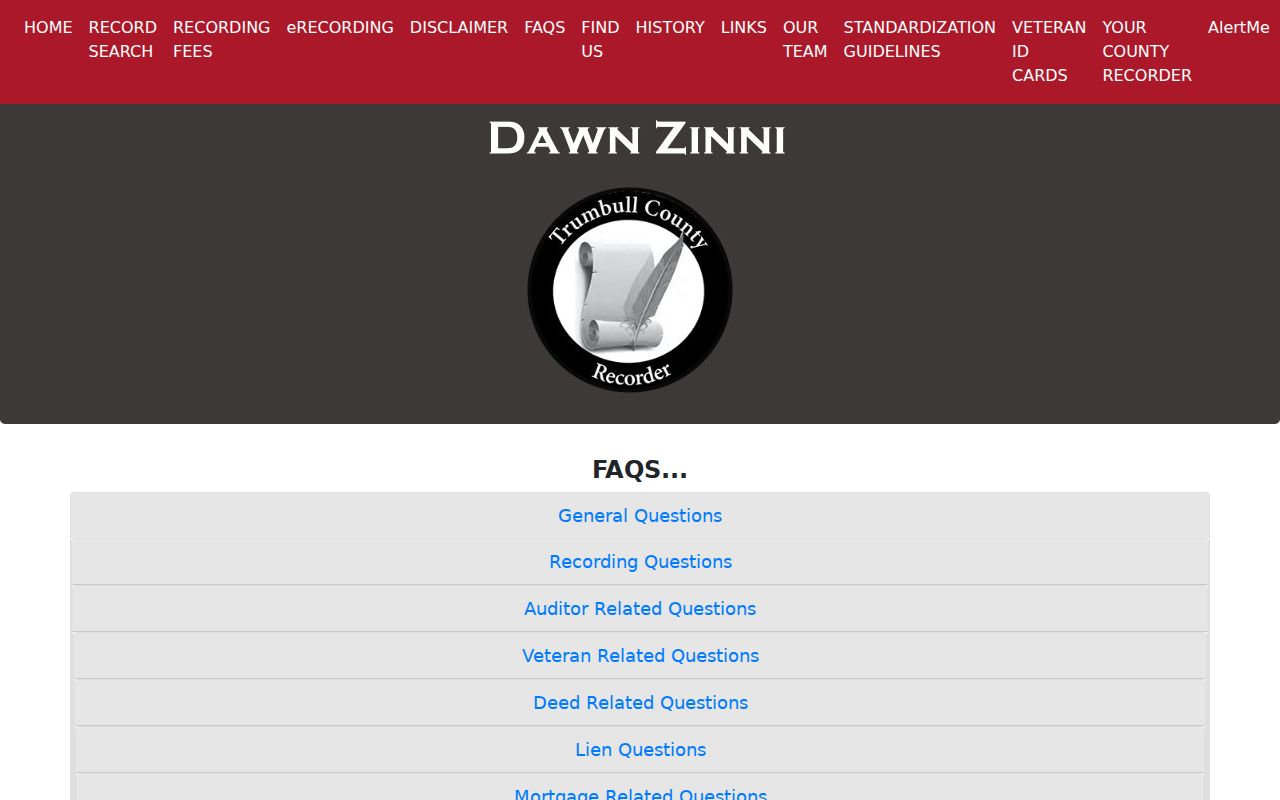
The county's long online coverage is valuable for a document trail, while maps, library sources, and the Historical Society help place that trail in a human and physical context.
Liberty Township Previous Residents Privacy
Past-resident research should stay grounded in a house history, family history, estate matter, or another lawful personal purpose. A property record may identify an owner, but it does not identify every person who lived at the address. A directory, obituary, or voter-related record also carries its own time and access limits.
Ohio Safe at Home and confidential voter protections can restrict address information. A missing result does not justify trying to reconstruct a protected location from unrelated records. When an official record needs correction or a defined public document is unavailable online, request that specific record from the responsible custodian under Ohio's Public Records Act, R.C. 149.43.